
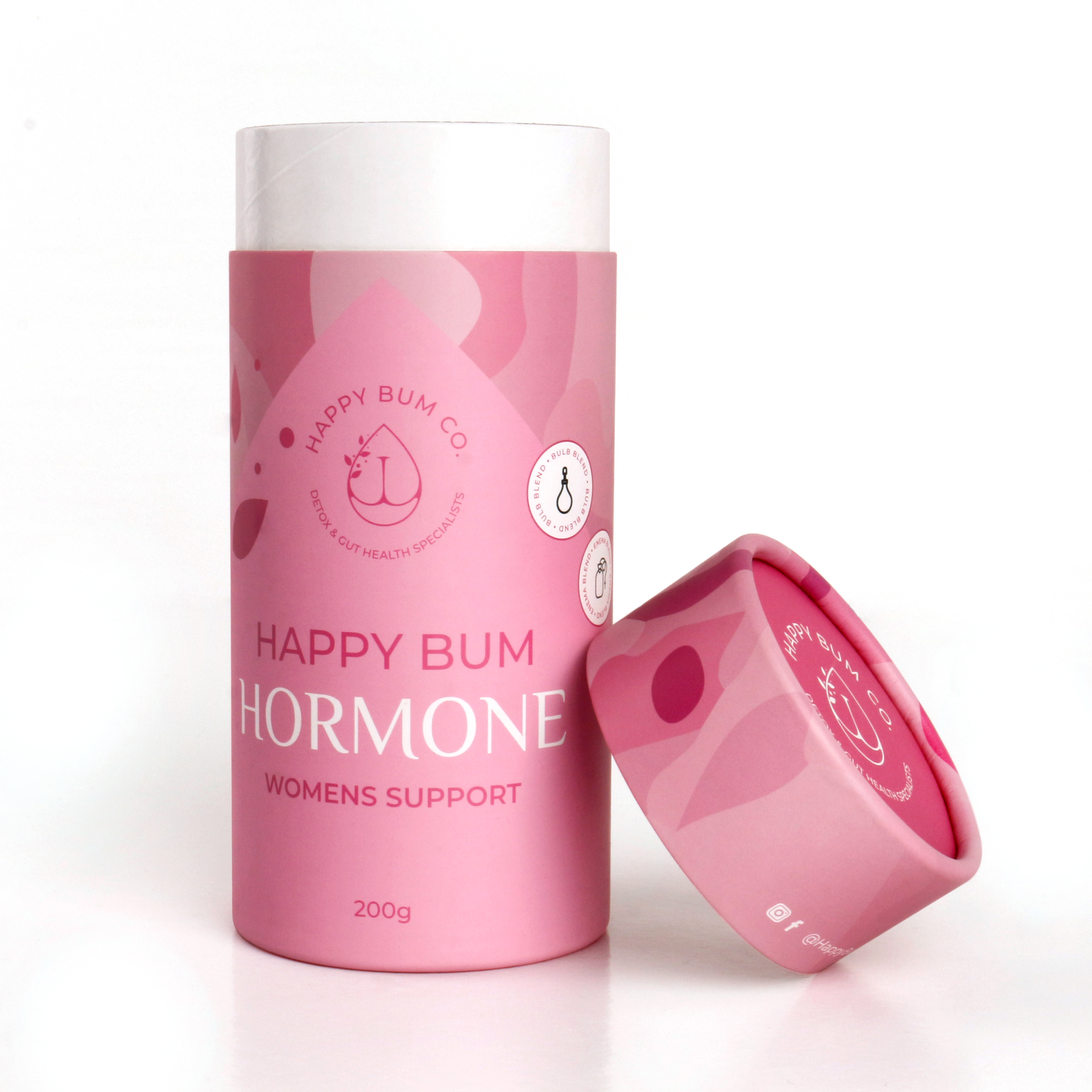
Ask an importer what went wrong with their first container of paper tubes and the answer is rarely the print or the structure. It is the condition of the tube itself: the walls feel softer than the approved sample, a lid that used to slide cleanly now grabs, or the whole tube has taken on a slight curve that was never in the dieline. Softening and warping after ocean freight are not random defects. They are what happens when a hygroscopic material spends weeks inside a steel box whose temperature and humidity swing every day. This article explains where the moisture comes from, why some tubes warp while others simply soften, and which construction choices actually protect a tube — so you can specify them before the container is stuffed, not after it lands.
What “Soft” and “Warped” Actually Are
Buyers usually describe two different failures with the same word. “Soft” means the wall has lost stiffness: a tube that stood up to a firm squeeze at the sampling stage now dents under a thumb, and its resistance to stacking and dropping has dropped with it. “Warped” means the geometry has moved: the tube is no longer round in section, or it has taken on a curve along its length, so the lid no longer seats flush and the tube will not stand reliably on a shelf.
Both are moisture symptoms, not handling damage. Crushed corners from rough forklift work look completely different — they are local and obviously mechanical. Softening and warping are gradual, they affect whole batches in similar ways, and they show up after the longest, most humid leg of the journey. Once you can tell them apart, you can trace each one to a specific construction decision.
Paper Trades Moisture With the Air Around It
Paper is hygroscopic. Its fibres absorb water vapour from damp air and release it back into dry air, and the stiffness of the wall moves with that moisture content. This is not a flaw of paper tube packaging; it is the behaviour of the material, and every fibre-based package in the container is doing the same thing at the same time.
The practical consequence is that a tube never keeps the stiffness it left the factory with unless its environment stays similar. A workshop in a dry inland climate, a sealed carton in a tropical port, and a shelf in a humid coastal warehouse are three different environments, and the tube will drift toward equilibrium with each of them. The drift is slow, which is exactly why a short domestic move rarely causes trouble and a multi-week ocean transit sometimes does.
It also matters which surfaces the air can reach. A face covered by lamination exchanges moisture slowly; a cut edge does not, because on a wound tube the cut edge exposes the end grain of every layer at once. That is why two tubes with identical printing can behave differently: the one whose edges and openings are sealed holds its shape far longer than the one whose barrier stops at the printed face. Our blank paper tube page shows the uncoated stock plainly — it is the fastest of the four to absorb and release moisture.
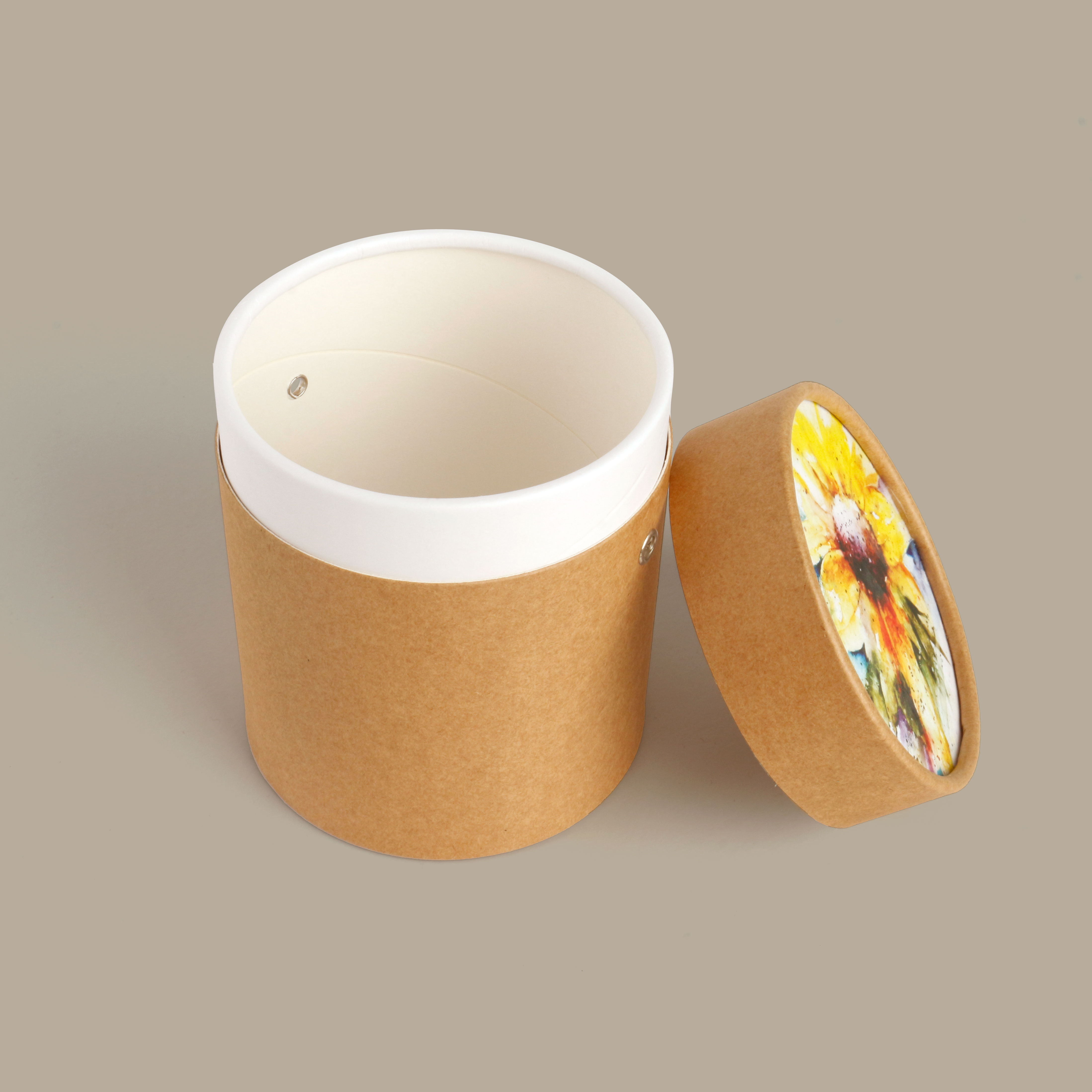
The photo above shows the two details that matter most: an uncoated kraft wall, and an opening. Both are doors for moisture. Neither one is wrong — but each one has to be part of the plan.
Where the Water Comes From Inside a Container
A shipping container is not a dry box. It is a steel shell that heats up in the day and cools down at night, and every time that cycle runs, humidity inside rises and falls with it. When the container skin cools faster than the air inside, moisture condenses on the roof and walls — the effect shippers call container sweat — and drips onto the top tier of cartons. Goods loaded into a container in a humid port carry that humid air inside with them for the whole voyage.
The second source is the packaging itself. Cartons, pallets and the tubes all arrive at the port carrying some residual moisture from the mill, from converting, and from the warehouse they were made in. Inside a closed container those materials trade moisture with each other, so an unprotected tube can gain water without a single drop touching it.
The third source is the tube’s own openings: vent holes, the gap under a loose-fitting lid, and any unlaminated cut edge. Water vapour moves into a tube through its end grain far faster than through its printed face, which is why sealing the ends matters as much as covering the sides. None of these sources is dramatic on its own. Together, over a few weeks of daily cycling, they are enough to change how a wall feels and how a lid fits.
Why Some Tubes Warp Instead of Soften
If moisture reached every part of the wall evenly, tubes would soften without changing shape. Warping appears when one part of the wall gains or loses moisture faster than the rest, and that happens whenever the tube’s construction gives one face more protection than the other.
The classic case is a tube with a laminated printed outer face and an exposed inner face. The outside resists the container’s humidity swings; the inside follows them. As the two faces try to move at different rates, the wall develops internal stress, and the tube bows or goes oval to relieve it. The same mechanism explains why a lid that measured perfectly at sampling can feel tight or loose after shipping — the geometry has drifted, so the friction fit has drifted with it. That fit is worth specifying separately, as our closure guide explains.
Structure changes the exposure pattern too. On a telescopic two-piece tube, the outer sleeve is fully exposed while the base it covers is shaded, so the two parts age at slightly different rates. On a butt-joint three-piece tube, the flush lid-to-base alignment shows ovality immediately. Neither structure is wrong — but both reward a construction that keeps moisture movement symmetrical.
The Four Barriers That Actually Protect a Tube
Every real protection plan is built from the same four layers. Each one blocks a different thing, and each one leaves a different gap:
| Barrier | What it blocks | What it does not |
|---|---|---|
| Lamination — matt, gloss or soft touch | Slows vapour through the printed outer face and protects the print | Cut edges and end grain stay open |
| Foil or PE liner inside the tube | Vapour, odour and oil reaching the product | Protects contents, not the printed wall itself |
| Foil membrane, tin lid or shrink seal | Closes the top opening of the tube | Does nothing for the base edge or the wall |
| Export packing — carton, poly bag, pallet wrap, desiccant | Buffers the container’s daily humidity swings | Cannot rescue an unprotected tube construction |
The order matters. Export packing is the cheapest layer and the most often over-trusted: a poly bag around a tube whose edges are unsealed buys time, not protection. Conversely, a foil liner inside a tube whose wall has softened does not restore the wall — it protects the product inside a package that now looks tired. For food and aroma-sensitive products, the liner is the layer that carries the shelf-life argument, and our article on barrier technology for food-grade paper tubes goes into that in depth.
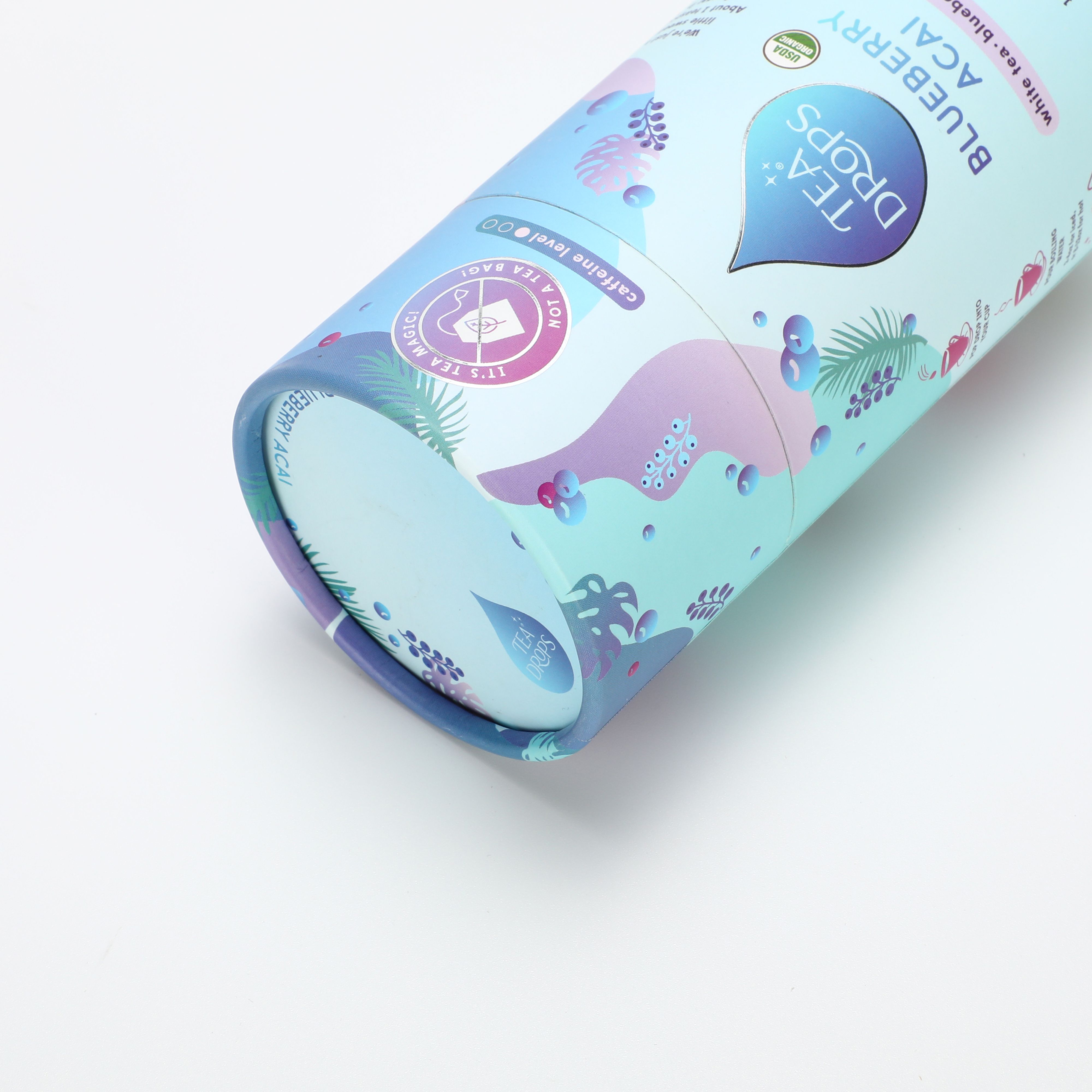
Tubes like the one above — tea, coffee, protein powder, anything aromatic or hygroscopic in its own right — are where the liner earns its cost. The printed wall sells the product; the liner keeps it sellable.
Matching the Construction to the Product
The right level of protection depends on what the tube is doing. When the product already sits in a sealed primary bag — protein powder, bath tablets, many cosmetics refills — the tube is secondary packaging, and lamination plus a sealed lid is usually sufficient. The tube protects the bag, the bag protects the product, and moisture reaching the wall does not reach the contents.
When the product touches the tube or depends on aroma — loose tea, whole coffee beans, anything the customer smells before buying — the liner becomes the load-bearing decision. Our coffee and tea coffee and tea tube is specified this way: an aluminium foil liner or inner bag to preserve aroma, with a foil membrane or tin lid to improve resistance to humidity and air.
The honest middle ground is the one buyers argue about most: lamination improves appearance and slows moisture, but it is a retarder, not a waterproofing layer. If a brand wants uncoated kraft for its look, it should expect that tube to move more in transit and should plan the product and the shelf-life claim accordingly. This is a trade-off, not a defect, and it is far cheaper to decide it at design time. Our design guide covers how those decisions sequence together.
What to Put in Writing Before Production
None of the following costs more than a sentence in an email, and together they remove nearly every assumption a supplier would otherwise make about transit:
- Name the route and the season — a tube bound for a northern European winter faces different conditions from one landing in a Gulf summer.
- Specify lamination on every printed face, and say which edges stay exposed so the supplier can plan them.
- Name the liner — foil, PE or none — and whether it is sealed after filling.
- Specify the closure and any seal: lid type, foil membrane, tin plate, or shrink wrap.
- Ask how the tubes are packed for export: carton construction, individual poly bags, pallet wrap, and whether desiccant is included.
- Agree what “acceptable” means on arrival — an inspection window, and who judges it, in writing.
These choices also shape the quotation: each barrier layer carries its own material and setup cost, so fixing them early keeps quotes comparable. Our pricing guide shows where they land in the cost structure, and our MOQ guide explains why decoration choices affect the minimum quantity.
What Cannot Be Fixed — and What to Decide Instead
Some drift is a property of the material, not a supplier failure. Uncoated kraft will always respond to humidity faster than a laminated tube; that responsiveness is part of the look buyers choose it for. A tube with vent holes will always exchange air with its surroundings; that is what the vent is for. No barrier layer changes either fact, and a supplier who promises otherwise is guessing.
It is equally true that transit is not the end of the risk. Tubes stacked on a concrete floor in a damp warehouse, or stored under a warehouse roof that swings with the weather, will soften no matter how well they were built. Arrival inspection and downstream storage belong to the buyer’s side of the system.
So the decision is not “how do we stop moisture” but “which risks do we buy down and which do we accept”. Brands that answer that question before sampling get both a realistic shelf life and no surprise claims later. Brands that leave it to the container usually discover the answer the hard way.
How We Build and Pack for Export
Our construction range is built around this decision. All four paper stocks can be laminated — matt, gloss or soft touch — foil and PE lining can be applied to create a food-safe, oil-resistant inner barrier, and tubes can be sealed after filling with metal discs or shrink wrapping, which our FAQ answers in detail. Mass production runs under ISO-standard QC, on FSC-certified paper, with soy-based inks as standard.
On logistics: we ship worldwide — Europe, the Middle East, North America and beyond — with more than 30 countries served, the minimum order is 1,000 pieces per design with 3,000 recommended for better pricing, and production takes two to three weeks after sample approval, with rush orders accommodated where the schedule allows.
What we ask from buyers is the other half of the system: tell us the route, the product’s sensitivity, and how the goods will be stored after arrival. With those three facts we can recommend which barriers are worth their cost and which are not — and the container arrives with the tube you approved, not a softer version of it.
Frequently Asked Questions
Can paper tubes survive ocean shipping?
Yes — when the construction and export packing are specified for the route. Unprotected tubes in a humid container are the ones that arrive soft.
Why were my samples fine but the production run was not?
Samples are usually judged in a dry office within days of arriving. Production tubes spend weeks in a container, then wait in a warehouse — a very different moisture history.
Does lamination make a tube waterproof?
No. Lamination slows vapour through the printed face. It is a retarder, not a barrier — cut edges and end grain still exchange moisture.
Do I need a liner if my tube is laminated?
For dry goods in a sealed bag, usually not. For aroma- or moisture-sensitive products that touch the tube, a foil or PE liner is the layer that matters.
What causes warping instead of softening?
Uneven moisture movement — typically a laminated outer face paired with an exposed inner face, so the wall bows or goes oval to relieve the stress.
How should I store tubes after they arrive?
Flat, off the floor, away from exterior walls, and sealed in their poly bags until filling. Ask us about export packing before the container is booked, or contact us with your route.
Plan the Barrier Before You Book the Container
Tell us your route, your product’s sensitivity and how the goods will be stored on arrival. We will confirm the construction — lamination, liner, seal and export packing — before production starts.
Request a Quote