

A loose lid is almost never one bad part. Each component — the tube, the plug, the lid — was made within its own tolerance, and every one of those tolerances was signed off as acceptable. The problem is that tolerances add up. When several dimensions land at the loose end of their range on the same unit, the combined gap crosses what we call the friction band, and the lid that felt perfect on the sample suddenly slides off in the customer's hand. That accumulation is called tolerance stack-up, and once you understand it, you can specify packaging that closes the same way on every unit — not just on the one you approved.
First, Work Out Which Kind of “Loose” You Have
Buyers send us photos of loose lids and describe them with the same word, but the three failure modes behind that word have different causes and different fixes. Before you write a complaint email or open a claim, put your unit into one of these buckets.
Slips off with no resistance. The lid ID and the tube OD are simply too far apart on this unit. This is classic stack-up: the tube ran small, the lid ran large, and both were still “in spec.” The fix is a written friction band, not a tighter single tolerance.
Rattles when shaken. The diameters are close enough to stay on, but the engagement depth is too short. This is common on lids designed with a shallow plug — there is barely any wall contact to hold alignment, so the lid rocks. Deepening the plug or widening the overlap usually fixes it without touching the diameters at all.
Feels fine on some units, loose on others. This is the most telling version, because inconsistent feel across a batch is exactly what stack-up produces. One unit where every dimension landed mid-range feels premium; the next unit at the combined worst case feels cheap. If your complaint is inconsistency rather than universal looseness, tolerance distribution — not a design error — is the culprit, and the conversation you need with your supplier is about process control, not redesign.
Where the Tolerances Actually Live
A telescopic lid fit is a chain of dimensions, and each link in the chain has its own allowed variation. The fit you feel is the sum of all of them. Here is where the variation comes from in our experience.
Tube outer diameter. A wound paper tube is spiral or convolute wound from layered plies, and its OD varies with paper caliper, adhesive laydown, and winding tension. Paper is not plastic or metal; some variation across a production run is inherent to the material, and no supplier can drive it to zero without driving the price up.
Lid inner diameter. The lid is its own wound part with its own tolerance. A lid that measures perfectly at the start of a run and a lid measured at the end can sit at different ends of the band, especially on long runs where tooling and paper batch change.
Wall thickness variation. The wall is built from plies, so thickness varies slightly around the circumference and along the height of the tube. Because the lid grips the wall, local thin spots reduce friction locally, even when average OD measures on target.
Decoration buildup. This is the one that surprises buyers most. Matte lamination, soft-touch film, foil stamping, and spot UV all add a thin layer of material to the outside of the tube. On a plain sample the fit was tuned without decoration; in production the plug slides against a laminated surface with a slightly different thickness and a very different coefficient of friction. A fit that was snug on kraft can be loose once film goes on.
Moisture. Paper moves with humidity. A tube conditioned in a dry production hall and a tube that crossed the ocean in a steel container are not the same physical object by the time the customer opens it. If the fit was tuned with zero margin, seasonal and transit humidity will move it.
| Dimension | What varies it | What it does to the fit |
|---|---|---|
| Tube OD | Paper caliper, winding tension, adhesive | Small OD means less grip |
| Lid ID | Its own winding tolerance, tooling wear | Large ID adds clearance |
| Wall thickness | Ply layup around the circumference | Thin spots lose local friction |
| Decoration layer | Lamination, foil, spot UV film thickness | Changes surface and diameter |
| Engagement depth | Lid plug height, tube height tolerance | Shallow plug rattles |
Why the Sample Felt Perfect and the Shipment Does Not
We are not saying your supplier approved the wrong sample. We are saying the sample answered a narrower question than the shipment has to answer. Three gaps open up between approval and production.
Different tooling. Pre-production samples are frequently made on short-run tooling or by hand, then mass production moves to the production line where speed, tension, and die condition differ. The sample was real, but it was not built the same way.
Different point in the tolerance range. A sample is one unit. If the sample happened to land mid-range — the most comfortable point — approval tells you almost nothing about how the 5,000th unit feels at the combined worst case. This is why we prefer to send samples cut from, or made immediately alongside, the first production pieces whenever the timeline allows.
Decoration added after the fit was set. If fit was confirmed on a plain prototype and printing and lamination were applied later, the surface the plug now rides against has changed. Any fit confirmation that happened before the final decoration stack existed needs to be repeated after it.
None of these gaps means anyone lied. They mean the approval step was allowed to close too early. The checklist later in this article is designed to keep it open until the production configuration, not the prototype configuration, has been signed off.
What a “Good Fit” Actually Means: The Friction Band
Between “impossible to open” and “falls off” sits a band of acceptable feel. We usually describe it to buyers with three checkpoints, and you can evaluate all three yourself without any instrument.
Insertion resistance. Closing the tube should take deliberate, even pressure — a smooth slide, not a free drop and not a fight. If you can close it with two fingers and no effort, you are probably below the band.
Hold test. Close the tube, hold it by the body only, and shake it gently upside down. The lid should not walk, rotate, or loosen. A lid that survives ten seconds of this has engagement depth working for it.
Re-open consistency. Open and close it five times. The feel should be the same each time. A fit that tightens or loosens across cycles points to wall variation or a plug edge that is deforming the tube mouth.
The important move is not testing — it is agreeing. Ask the supplier to define, in writing, what “good” means for your project: which of these checks applies, and what happens if a unit fails. A written friction band turns “it feels loose” from an argument about impressions into a pass/fail conversation about an agreed standard.
How Structure Changes the Problem
The fit risk you inherit depends heavily on the tube structure you choose, and this is where a small design decision early on saves a lot of tolerance management later.
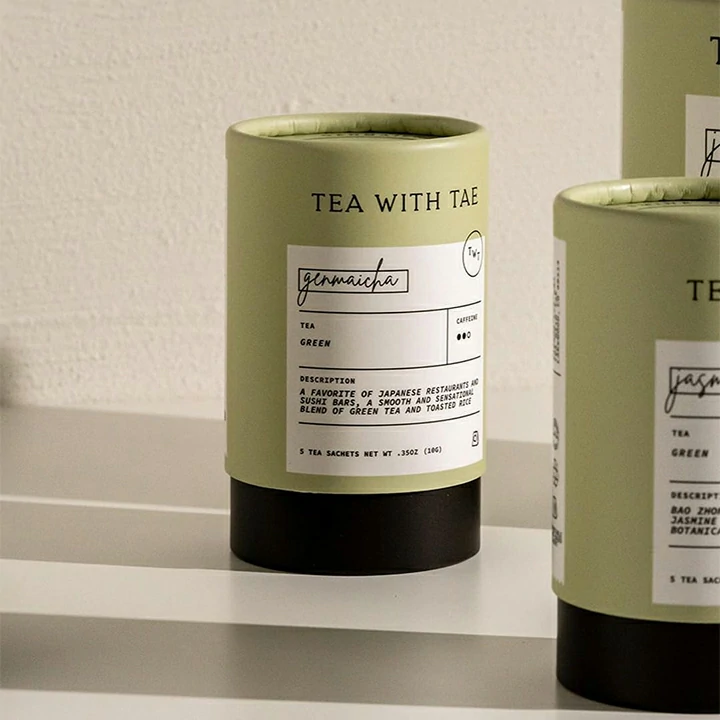
A single-piece tube removes the telescopic interface from the body entirely — the closures at both ends become the only fit surfaces. With fewer stacked tolerances, there is simply less that can drift, which is why one-piece formats are our default suggestion when the product inside does not need the slide mechanism.
A two-piece telescopic tube puts the fit front and centre: the lid and body are separate wound parts that must agree on a diameter across an overlap. It delivers the premium sliding reveal, but it carries the most stack-up risk of the three structures, so it deserves the tightest written fit definition.
A three-piece butt-joint tube splits the difference: the lid seats onto a flat shoulder rather than sliding over a long overlap, so the fit depends more on shoulder flatness and height control than on sustained friction. Rattle is rare; the risk shifts to an uneven seam line where lid meets shoulder.
If child safety is part of the brief, a dedicated child-resistant tube changes the conversation again: the locking mechanism itself defines the fit, and the mechanism's performance requirements usually dominate the tolerance discussion. We covered how each closure type behaves in our closure selection guide, and it is worth reading alongside this article.
The Checklist to Send Before Mass Production
Everything above condenses into a short list of asks. Copy it into your next RFQ or production confirmation email. None of it is adversarial — a serious manufacturer will recognise every line as normal practice.
| Ask for | Why it matters |
|---|---|
| Written friction band definition | Turns feel into a pass/fail standard |
| Diameters of tube and lid, in writing | Both parts need stated tolerances |
| Fit confirmation on decorated samples | Film and foil change the surface |
| Samples from production tooling | Short-run tooling is not the line |
| Stated minimum engagement depth | Prevents rattle and lid walk |
| In-process fit checks during the run | Catches drift mid-production |
The last line matters more than it looks. A fit can be correct at the start of a run and drift as tooling warms, paper batches change, or tension adjusts. Asking how fit is checked during production — not just before it — is the question that separates a process-controlled supplier from one that samples at the end and hopes.
The Honest Trade-Offs
You should know what tightening fit control actually costs, because the trade-offs are real and pretending otherwise helps nobody.
Tighter tolerances cost money. Every reduction in allowed variation means slower winding, more measurement, more rejected stock. On a paper product, chasing plastic-level consistency has a price, and it lands in your unit cost. The efficient question is not “how tight can you go” but “how tight does this lid actually need to be” — a tea tube sold on a shelf needs less friction consistency than a supplement tube opened daily for months.
Some movement cannot be engineered away. Paper responds to humidity; that is the material, not a defect. The response is not zero-tolerance specification but margin: design the fit so that the full humidity range still lands inside the band, rather than tuning to the middle and hoping the environment cooperates.
Perfection is the wrong target — distribution is the right one. A batch where every unit sits comfortably inside the band beats a batch where most units are perfect and a few sit at the edge. Ask your supplier about distribution and in-process checks rather than demanding a smaller single number. This is also where cost expectations should be set; our pricing guide explains how process requirements flow into quotes.
How We Keep Lid Fit Consistent
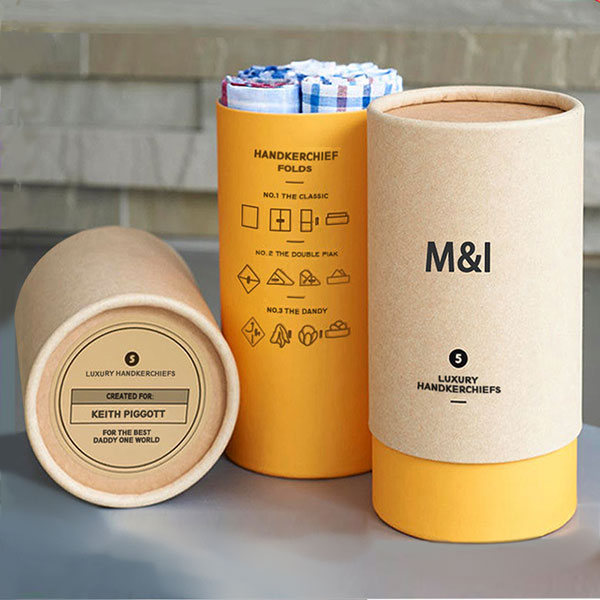
Buyers often ask what our side of the process looks like. It starts with the dieline: once your dimensions are confirmed we provide the dieline and every fit-critical dimension is fixed on that drawing before anything is wound. Pre-press proof approval happens next, and because we know decoration changes fit, fit-relevant decisions are revisited after the final print and lamination stack is defined.
Sampling is deliberately structured: stock samples are free if you want to feel a standard construction, and a custom printed sample carries a sampling charge precisely because it is built on your specification rather than pulled from a shelf. Mass production runs under our ISO-standard QC process, and when a project warrants it we agree the friction band in writing and check against it through the run. All of this is documented on our certifications page, and the full workflow from quote to shipment is on our FAQ.
If you are scaling into higher volumes and wondering whether consistent fit becomes harder as quantity grows, our MOQ guide walks through where the real constraints sit — and, more often than buyers expect, the constraint is not the machinery but how early the fit definition is frozen.
Frequently Asked Questions
Can a loose lid be fixed after production?
Usually no, not economically. A few mills can re-run lids, but the practical fixes are a shimmed inner ring or replacing the lid run. Prevention through a written fit standard is far cheaper.
Does humidity really change lid fit?
Yes. Paper expands and softens with moisture, so a fit tuned in a dry workshop can loosen in a humid warehouse or after ocean transit. Good fits carry margin for this range.
Should I specify one tolerance number for the lid?
Better to specify the fit outcome: a defined feel test with pass criteria, plus both diameters with stated tolerances. One number on one part ignores the stack-up of the other.
Why did my second order fit differently from the first?
New paper batch, tooling condition, or a changed decoration layer can each shift the stack-up. Re-confirming fit on first articles of every new order catches this.
Is a butt-joint lid less likely to feel loose?
Generally yes for rattle, because the lid seats on a shoulder instead of relying on long-overlap friction. The trade-off is less sliding premium and visible seam control.
How early should fit be agreed in the design process?
At the dieline stage. Once structure and dimensions are frozen, fit decisions become expensive retrofits instead of free drawing changes.
Need a Lid Fit That Holds From Sample to Shipment?
Send us your dimensions and target product. We will confirm the structure, define the fit band with you, and provide samples before mass production.
Request a Quote